US portal     Global links :  Comus-Intl.com   www.Assemtech.co.uk   www.comus.be   www.comus.fr   www.comusindia.com Comus India

Worldwide Agents/Distributors : 


 Catalogue Search # part


Quick Jump Reference


TILT AND TIP-OVER SWITCHES AND MOTION SENSORS

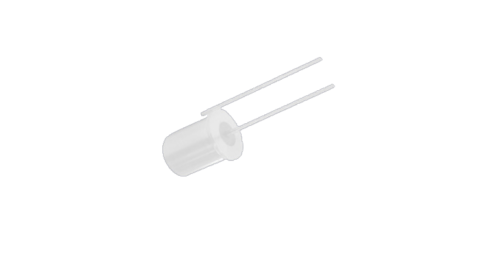
The tilt and tip-over switches and motion sensors described below are available as mercury metal and our patented non-mercury metal (patents #5.209.343 and #5.332.876.). Mercury glass tilt switches are also available. All switches are evacuated, filled with inert gas and hermetically sealed to ensure long life and low contact resistance.

TILT SWITCHES

Tilt switches are used to sense movement (tilt) of a device above and below a horizontal axis. A typical use is in a thermostat. A glass mercury switch is mounted to a bi-metallic spring which expands and contracts with temperature.  As the spring moves, the switch contacts pass through the horizontal plane, opening or closing to operate the furnace or boiler.
The angle through which the switch must move for proper operation is called the differential angle and is measured from the point of just make to just break; it is specified as a maximum. When selecting a tilt switch, it is important to ensure that the operating mechanism can move the switch through an angle greater than the differential angle.
Some additional applications include: level controls, appliances, security alarm systems, toys and games, float switches and water-treatment equipment (non-mercury) .

TIP -OVER SWITCHES

Tip-over switches sense tilt over 360° of a vertical axis. A common use is in portable heaters used in the home to prevent electrical shock or fire. When the heater tilts more than a specified angle, the switch operates turning the heater off. This angle, called the operate angle, describes the angle from vertical to the point of contact operation, subject to a tolerance, ie. 45° ± 10° (35° to 55°). Normally closed (tilt to open) and normally open (tilt to close) switches are available.
Some additional applications include: portable lamps, PC anti-theft devices, vending-machine alarms and machinery security systems.

MOTION/VIBRATION SENSORS

Motion sensors are very similar in design to tilt switches; in fact, some tilt switches are used as motion sensors. The sensor will be in one condition (open or closed) at rest. When it is subjected to motion it will continually change state as long as it remains in motion. Some common applications include: anti-theft devices, man-down alarms to detect non motion, smart appliances to turn off power when not in use and portable equipment to do the same.

ENCAPSULATED SWITCHES

Tilt and tip-over switches are available in encapsulated form using a nonconductive housing filled with epoxy. Among the advantages of encapsulation are: no exposed electrified parts and protection of the switch from damage due to shock, vibration or corrosion. These switches are ideally suited for use in locations where an unprotected unit would be damaged. Utilizing our experience and special equipment, we set the switches in the positions necessary to meet your needs and then epoxy them in place to ensure a rugged and reliable solution to your problem.


REED SWITCHES

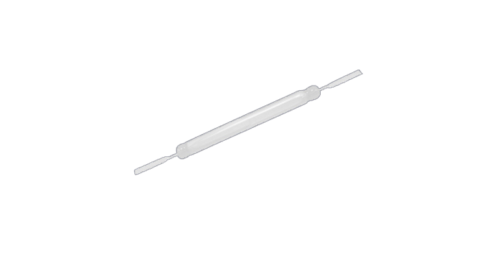
The reed switch, invented by Dr. W. B. Elwood at Bell Telephone Laboratories in 1936, is an interesting device. It consists of two ferromagnetic and specially shaped contact blades (reeds) positioned in a hermetically sealed glass tube with a gap between them and in a protective atmosphere. The plated contact surfaces are isolated from the outside environment, which protects the contacts from contamination. Reed switches are available as form A (normally open) and form C (changeover), and are operated using a magnetic field generated by either a permanent magnet or current-carrying coil. The features that make the reed switch a valuable tool include compact size, low weight, quick response time, long life (nominally 50 million operations) and low cost.   Some common applications are: reed relays, automotive sensors, robotics sensors, security sensors and toys and games.
Comus distributes reed switches manufactured by W. Günther GmbH (one of the Comus Group of Companies.)


 REED RELAYS - LOW VOLTAGE

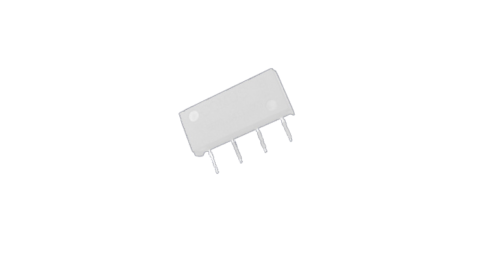
Reed relays use reed switches as the contacts, so the same desirable features are available in the relay as well. The reed relay gives the reed switch additional features. These include a housing that not only compensates for the fragility of the switch, but also facilitates the use of automatic insertion equipment for printed-circuit-board mounting and electrostatic shielding for use in "noisy" environments. DIP, SIP and surface-mount packages are available.
Common applications include communications and office-automation equipment and consumer electronics.

 REED RELAYS - HIGH VOLTAGE

The high-voltage relay uses a high-vacuum reed switch to achieve its high dielectric strength and breakdown characteristics. Additional features include high shock and vibration resistance, low contact capacitance, high switching frequency and a housing that protects against harsh environments. A variety of contact and mounting configurations are available. Common applications include electronic medical equipment, cable-testing equipment, copying machines, and test equipment.

MERCURY-DISPLACEMENT RELAYS

Used to switch high load currents, these devices consist of a hermetically sealed chamber containing a pool of mercury, one of the load contacts (the other is in constant contact with the mercury) and a coil-driven plunger in a protective atmosphere. When the coil is energized, the plunger is pulled into the mercury pool causing its level to rise and contact the normally dry-electrode, completing the circuit. These switches are available in 1, 2, and 3-pole configurations with a variety of coil voltages.
Applications include heating systems and lighting and traffic controls.


LIQUID LEVEL SENSING FLOAT SWITCHES

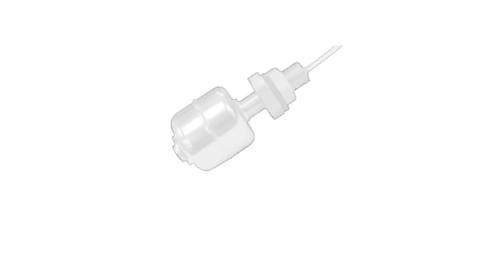
These switches are used to monitor liquid levels by opening or closing when a desired action point is reached. A variety of types are available using mercury and non-mercury tilt switches and, also, permanent magnets and reed switches.
Common applications include sumps, pump-control systems, bilge pumps, below ground vaults and irrigation systems.


PROXIMITY SENSORS

Proximity sensors use a reed switch and a permanent magnet. Each is encased in a plastic housing for protection and ease of mounting. A classical use is sensing the opening of a door in a security system. A reed switch in the jamb and a permanent magnet in the door complete a circuit when the door is closed. Opening the door breaks the circuit.

TILT SENSORS WITH POTENTIOMETER OUTPUT

These devices combine the features of a tilt switch with the versatility of a potentiometer. Rotating the sensor will vary the resistance in proportion to the angle rotated. They are available in 2-terminal and 3-terminal configurations and also, in a sealed epoxy housing for mounting on a PC board. Resistance values from lK OHM to lM OHM are available. Common applications include medical equipment, robotics and aerial work platforms.

CUSTOM ASSEMBLIES

Are a convenient and inexpensive solution to trying to adjust several tilt switches to perform a special function "in house''. Give us your specifications and we will design and build a module for you.


Homepage


    Comus International, 454 Allwood Road , Clifton, NJ 07012
Tel :+1 (973)777-6900 / Fax +1 (973)777-8405  / e-mail : info@comus-intl.com